History
-
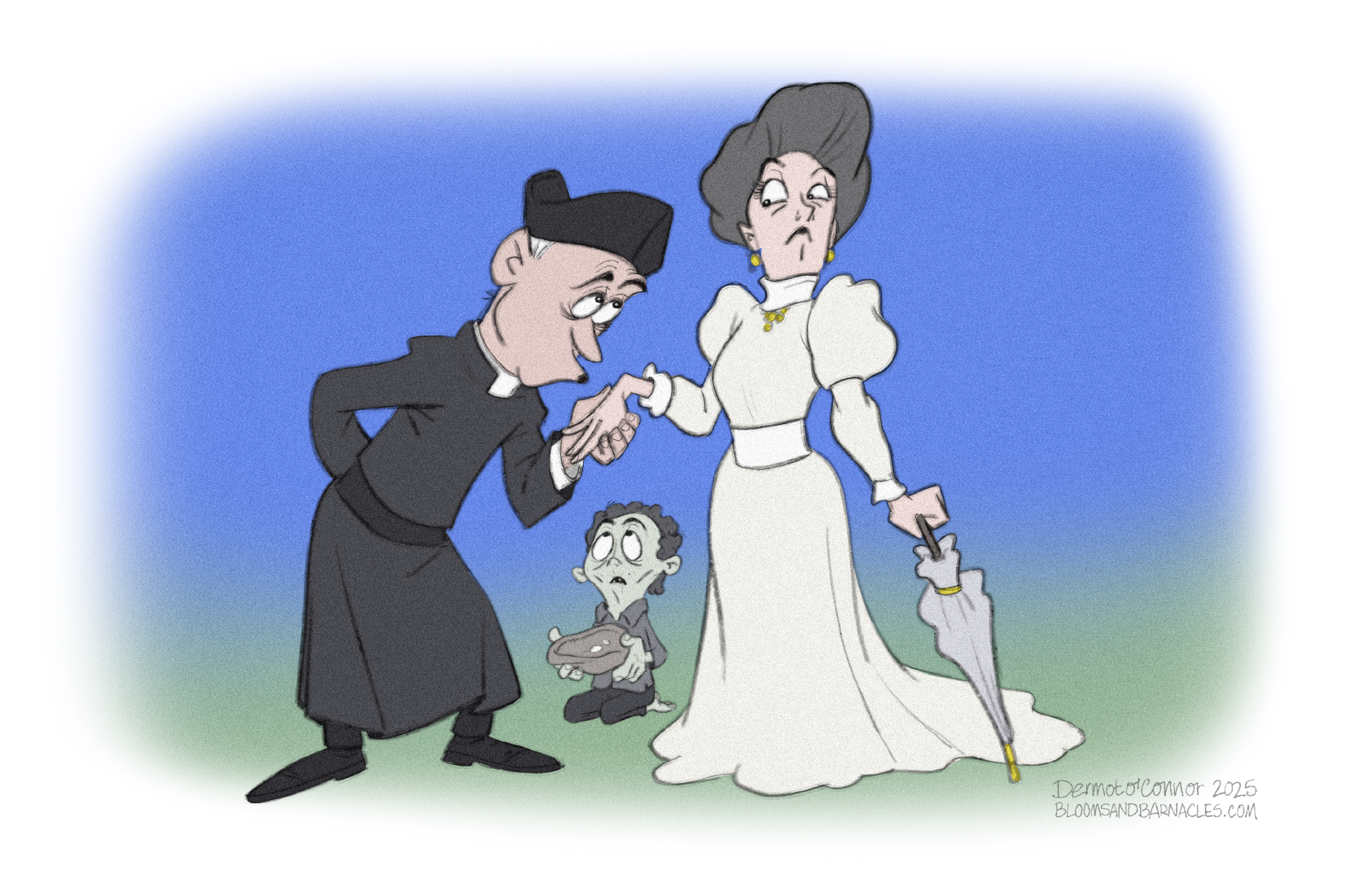
Ep. 175 – Father Conmee
What is Dublin without Church and State? Topics in this episode include Stephen/Joyce’s past with Father Conmee, what Father Conmee represents, the eternal battle between Church and State (is it even a battle?), the collusion between Church and State, Father Conmee’s fondness for high-class women, which children Father Conmee likes, Father Conmee’s love of the…
-
“Sirens” Songs: The Croppy Boy
This is part one of a two part series about select songs from the “Sirens” episode. You can read part one here. “Bloom’s, the novel’s, and, apparently, Joyce’s answer to a rancid discourse of Irish nationalism appears to be nothing more than gas, flatulence induced by an Irish diet too rich in that unctuous, “grosser”…
-
Ep. 171 – Richard and Gilbert and Edmund and Will
What if the Shakespeares were really a bunch of crumb-bums? Topics in this episode include Shakespeare’s brothers Gilbert, Richard, and Edmund, which ones Stephen thinks were bad brothers and which were good brothers, whether Shakespeare turned his brothers into villains in his plays, Anne Hathaway’s relationship to her brothers-in-law, why Shakespeare’s brothers never married, Gilbert…
-
Ep. 168 – Why Stephen Talks about Shylock
Isn’t Carrotty Bess great? Topics in this episode include why Stephen compares Shakespeare to Shylock, Shakespeare’s father John Shakespeare and his many business ventures, his legal troubles caused by some of those business ventures, Shakespeare’s corn-hoarding during a famine, the irony of Irish Nationalists being devoted to Shakespeare, Shakespeare’s role in providing propaganda for Britain’s…
-
Who were the real people in the Ormond Hotel in “Sirens”?
“Sirens,” the eleventh episode of Ulysses, is memorable for its musical prose, but it also stands out as an episode of revelry in the bar and restaurant of the Ormond Hotel. While Bloom cringes in anguish watching Blazes Boylan jingle-jangle off to meet Molly, the other colorful characters drown their sorrows in booze and song.…
-
The Most Historic Spot in All Dublin
“History in ‘Wandering Rocks’ is not only colonial history registered in the fabric of the city; it is also quite specifically colonial history distorted and dominated by Protestant and Anglo-Irish interpretations.” – Len Platt The eighth section of Ulysses’ tenth episode, “Wandering Rocks” opens with “two pink faces” greeting a third in some dark, dusty…
-
Ep. 151 – Blind Stripling
A wild Blazes Boylan appears. Topics in this episode include the incredible story of Reverend Thomas Connellan, the Bible Wars, Soupers, the Bird’s Nest orphanage, apostasy and conversion, a typographical error heroically corrected, the blind stripling, whether or not the blind stripling actually wants help from Leopold Bloom, Bloom’s savior complex, Bloom’s empathy, the history…
-
Decoding Dedalus: Christfox in Leather Trews
This is a post in a series called Decoding Dedalus where I take a passage of Ulysses and break it down line by line. The line below comes from “Scylla and Charybdis,” the ninth episode of Ulysses. It appears on page p.193 in my copy (1990 Vintage International). We’ll be looking at the passage that…
-
A Shakespearean Ghoststory Part 2: Anne Hath a Way
“In fact, it could be argued that versions of Anne Hathaway are always constructed in connection with Shakespeare, and that the ways she is depicted are designed to produce a particular ‘Shakespeare’ rather than an independent portrayal of Hathaway as an early modern woman…” – Katherine Scheil “Anyone steeped in western literary culture must wonder…
-
Decoding Dedalus: Hamlet, ou le Absentminded Beggar
“The art of James Joyce, like that of Mallarmé, is art preoccupied with method, with how it’s made. Even the sensuality of Ulysses is a symptom of intermediation. It is an hallucinatory delirium – the kind treated by psychiatrists – presented as an end in itself.” – Fernando Pessoa This is a post in a…